
A cyber incident affecting a small UK electricity generator in July 2026 resulted in several days of operational unavailability and triggered a government and NCSC response. UK authorities confirmed that the event posed no threat to the wider grid and caused no customer outages. Media reporting described the affected asset as a small gas-fired peaking plant of approximately 15 MW, although the operator, location, technical architecture, and exact attack path remain undisclosed.
Public reporting has linked the incident to Iran-linked actors, but no NCSC technical advisory has yet identified a specific group, exploited vulnerability, malware, PLC vendor, or other forensic evidence to support attribution. The incident therefore remains significant primarily as an example of cyber activity affecting real-world energy operations, while the depth of the OT compromise and the responsible actor remain unresolved.
UK Energy Threat Context and July 2026 Generator Incident
The July 2026 cyber incident affecting a small British electricity generator occurred amid an already elevated threat environment for UK critical infrastructure. In the year ending May 2026, the National Cyber Security Centre handled more than 200 incidents affecting UK critical national infrastructure and its supporting ecosystem, with approximately three-quarters assessed as linked to state actors. This reflects a broader shift in which hostile cyber activity is increasingly directed not only at information theft but also at systems that can affect real-world operations.

Figure 1. UK and EU formally attribute December’s cyber-attack against Poland's energy grid to Russian actors.
The energy sector is a particularly sensitive part of this landscape because modern generation and distribution depend heavily on digital control, remote access, industrial networks, and operational technology. Recent incidents elsewhere in Europe have reinforced this concern. In July 2026, the UK and international partners attributed an attempted December 2025 attack against Poland's energy grid to Russia's FSB Centre 16. According to the NCSC, a successful attack could have disrupted electricity supply to approximately 500,000 people. This illustrates continued state interest in developing the ability to interfere with energy infrastructure during periods of geopolitical tension.
Iran-linked cyber activity also forms part of the UK threat context. On 2 March 2026, following escalation in the Middle East, the NCSC advised UK organizations to review their cyber posture and prepare for possible activity from Iranian state and Iran-linked actors, including potential targeting of industrial control systems. At that time, however, the NCSC also stated that it had not identified a significant direct increase in the cyber threat from Iran to the UK.
This distinction is important when assessing the July generator incident. Iranian-affiliated actors have previously demonstrated interest in industrial control technology. UK and international authorities have documented activity associated with the IRGC-linked CyberAv3ngers group targeting internet-accessible PLC and HMI systems, including devices in the United Kingdom. That history establishes capability and intent, but it does not prove that CyberAv3ngers, or any other specific Iranian group, was responsible for the July 2026 attack.
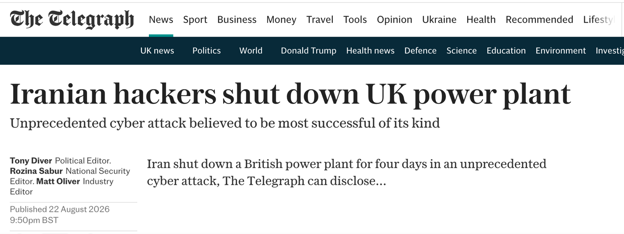
Figure 2. The Telegraph’s publication about the incident.
Publicly available information about the British incident remains limited. The government has confirmed that a small-scale electricity generator was affected by a cyber incident. Media reporting further suggests that the facility remained unavailable for approximately four days. These details appear credible, but the exact plant location, operator, control-system architecture and affected technology have not been publicly disclosed.
The technical cause of the disruption is also unknown. There is currently no public evidence showing whether attackers directly manipulated generation equipment, PLC logic or other operational technology. It is equally possible that the incident affected supporting systems and that the plant was subsequently taken offline as part of containment, investigation or recovery. For this reason, the most accurate description is that the cyber incident resulted in, or contributed to, several days of operational unavailability, rather than that attackers definitively controlled the plant's physical processes.
Similarly, reported links to Iran should remain qualified. The broader geopolitical context and previous Iranian-affiliated targeting of industrial systems make such attribution plausible, but no public NCSC technical advisory has identified a specific threat group, attack infrastructure, malware, exploited vulnerability or forensic evidence connecting the incident to an Iranian operator.
The significance of the incident therefore lies less in the size of the affected generator and more in what it may indicate about the exposure of smaller, highly automated energy assets. Such facilities can depend heavily on remote management, third-party maintenance, and industrial control systems, creating opportunities for attackers to disrupt operations without compromising the wider national grid. At present, however, the exact attack method, the depth of operational technology access, and the responsible actor remain unresolved.
Broader OT Threat Context and U.S. Parallels
On 7 April 2026, U.S. authorities disclosed an Iran-affiliated campaign targeting internet-connected PLCs across energy, water, and government environments. An update on 22 July expanded the observed equipment scope to include Rockwell Automation, Schneider Electric, and Siemens controllers.
A separate wave of attacks began on 27 July, affecting water and wastewater utilities in at least seven U.S. states. The FBI and EPA reported compromises of internet-facing Rockwell Automation MicroLogix PLCs, with attackers changing passwords and IP configurations, causing loss of monitoring or control and, in some cases, operational disruption. Investigators also identified repeated third-party network configurations across several victims, highlighting the risk created by common integrator designs and remote-access architectures.
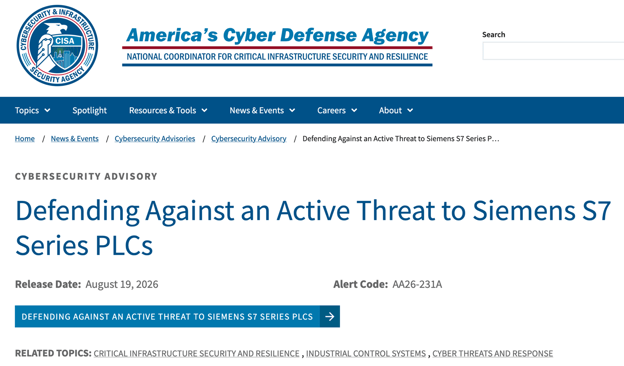
Figure 3. ACDA statement from August 19th, 2026.
On 19 August 2026, the NSA, CISA, FBI, Department of Energy, and EPA issued another warning concerning active targeting of Siemens S7-series PLCs across critical sectors, including energy generation and distribution. The advisory reported targeted reconnaissance and capability development, including the use of AI-generated exploitation scripts disguised as legitimate monitoring tools.
These incidents show that relatively accessible PLC environments can be used to create real operational effects without highly specialized destructive ICS malware. They also reinforce the importance of exposed controllers, remote administration, cellular connectivity, and third-party architectures as recurring attack-surface concerns.
At present, there is no public technical evidence linking the UK generator incident directly to the U.S. campaigns. The strongest comparison is therefore at the threat-model level: both reflect growing adversary interest in distributed, remotely managed industrial environments where limited cyber access may be sufficient to disrupt physical operations.
Dark Web Observations
Access to energy and operational technology environments is attractive because it can have value far beyond the initially compromised account or system. Initial access brokers may sell VPN credentials, remote sessions, or corporate network access to ransomware groups, extortion actors, or other buyers seeking entry into high-value organizations. Energy operators are particularly sensitive targets because even limited disruption can create immediate operational and financial pressure.
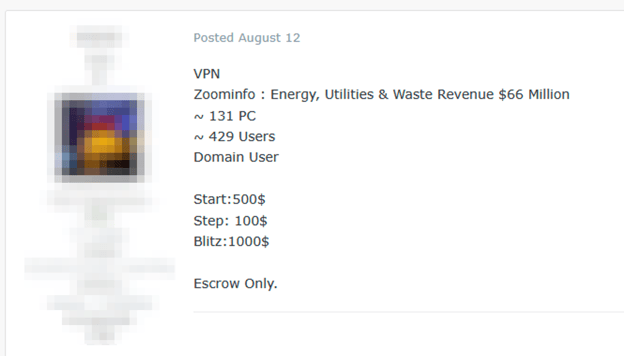
Figure 4. Actor advertises access to energy-field company on the Dark Web forum.
Political and state-linked actors may pursue different objectives. Access to an energy environment can support reconnaissance, intelligence collection, preparation for future disruption, or strategic signaling. Even a small generator may be useful if compromising it demonstrates an ability to reach infrastructure associated with electricity production.
Publicity is another important motive. Hacktivist groups and politically motivated actors often target energy organizations because such incidents generate significant attention, even when the actual operational impact is limited. Claims involving SCADA, PLC, or critical infrastructure access may also be exaggerated to increase the actor’s reputation, attract followers, or strengthen its position within underground communities.
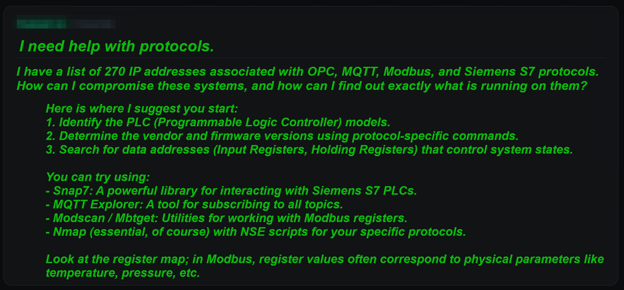
Figure 5. Restored conversation on the Dark Web forum from end of May 2026.
The broader threat ecosystem affecting OT shows why such access remains valuable: the same foothold can have financial value to criminals, intelligence value to state-linked actors, and propaganda value to politically motivated groups, particularly if it can later be escalated toward operational systems.
Conclusions
The July 2026 incident demonstrates that even a relatively smaller asset can become a meaningful cyber target when operations depend heavily on automation, remote access, industrial control systems, and third-party connectivity. Its importance should therefore not be measured only by the limited generation capacity affected, but by the apparent ability of a cyber incident to interrupt normal energy operations for several days.
At present, the strongest defensible assessment is that the incident caused or contributed to operational disruption at a UK energy facility, while the precise intrusion vector, extent of OT access, and technical basis for the reported Iran-linked attribution remain unknown. Claims that attackers directly controlled plant equipment, manipulated PLC logic, or belonged to a specific Iranian group are not yet supported by publicly available evidence.
The broader threat landscape suggests that exposed PLCs, remote-management infrastructure, weak authentication, cellular connectivity, and repeated third-party configurations remain key areas of risk across energy and other critical sectors. Smaller facilities may be particularly attractive because limited cyber access can still create operational impact, financial pressure, intelligence value, or significant publicity.
Energy operators should therefore treat distributed generation assets as part of the critical security perimeter, with priority placed on eliminating unnecessary external OT exposure, strengthening remote access, validating IT/OT segmentation, monitoring controller changes, securing third-party connectivity, and maintaining tested recovery procedures.
Remediations
The UK incident reinforces the need to treat smaller and remotely operated generation assets as part of the same critical-security perimeter as larger energy facilities. Even where the direct grid impact of a single generator is limited, compromise of remote access, industrial control systems, or supporting infrastructure can create operational disruption and provide attackers with a foothold for further activity. Remediation should therefore focus not only on preventing initial access, but also on reducing the ability of an attacker to move from corporate or remote-management systems into operational technology and interfere with generation processes.
Operators should first identify all externally reachable OT assets, including PLCs, HMIs, engineering workstations, industrial gateways, VPN appliances, remote desktop services, and cellular modems. Direct internet exposure of PLCs and HMIs should be removed wherever possible, and remote access should be routed through controlled gateways or jump hosts protected by strong authentication, MFA, network allowlisting, and detailed session logging. Attention should be given to undocumented or third-party-installed remote-access paths, which may not be included in standard asset inventories.
Network segmentation between IT and OT environments should be validated and strengthened, with access restricted to only those systems and protocols required for operations. Organizations should review privileged and service accounts, rotate credentials associated with remote or engineering access, eliminate default passwords, and monitor for unexpected changes to PLC configuration, passwords, IP addresses, project files, firmware, or operating modes. Known-good copies of controller logic and configuration should be maintained offline to support rapid comparison and recovery.
Energy operators should prepare for the possibility that cyber incidents may require temporary manual operation or controlled shutdown. Incident-response procedures should include OT-specific containment, preservation of forensic evidence, coordination with equipment vendors and system integrators, and tested recovery procedures for restoring controller configurations safely. Given the growing interest in industrial systems, continuous monitoring of underground markets, exposed credentials, remote-access infrastructure, and threat intelligence related to energy-sector targeting should complement technical controls and help identify early indicators of compromise before operational impact occurs.


